Understanding the Google Map Pack Ecosystem
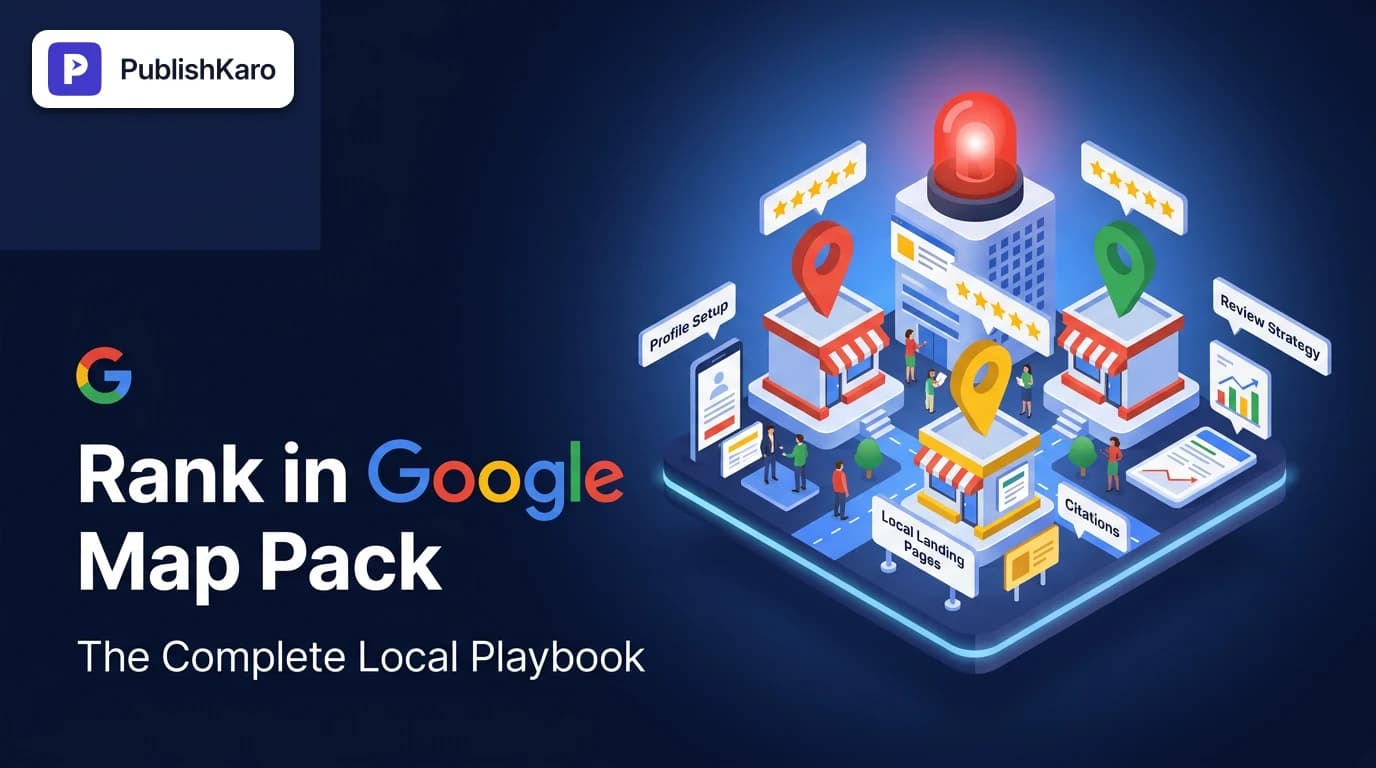
The Google Map Pack—frequently referred to as the local 3-pack—is the high-visibility search block displaying three prominent regional business listings alongside an interactive map. When users enter high-intent local queries such as "commercial electrician near me" or "independent pediatric dentist," Google frequently serves this dedicated block ahead of standard organic website results.
Securing visibility within this container requires a deep grasp of how the local algorithm operates. As detailed in the official Google Business Profile guidance, Google calculates local ranking using three distinct pillars:
- Relevance: How precisely your verified listing details and accompanying web content match what an individual is seeking.
- Distance: The calculated geographic distance between the searcher's physical location (or explicit geographic modifier) and your verified business address or designated operating zone.
- Prominence: The overall authority, stature, and credibility of your business online, derived from user reviews, media mentions, quality backlinks, business directory listings, and organic website stature.
To master local seo map pack positioning, your organization must align internal listing configurations with rigorous website engineering, comprehensive local citations, and a continuous customer engagement workflow. Mastering these elements allows localized enterprises to capture high-intent commercial footfall and telephone inquiries consistently.
Step 1: Claim, Verify, and Complete Your Google Business Profile
Your Google Business Profile (GBP) functions as the core digital anchor for local search. Leaving fields incomplete, selecting improper classifications, or ignoring validation guidelines damages algorithmic relevance before your website assets are even evaluated.
Primary and Secondary Category Selection
Your primary category is arguably the single most impactful individual signal inside your listing configuration. Google uses this selection to contextualize the core identity of your operation. When configuring your business:
- Select the most granular primary category: If you run an urgent care clinic, choose "Urgent care center" rather than "Medical clinic" or general "Doctor." If you operate an Italian restaurant, specify "Italian restaurant" rather than a broad "Restaurant" tag.
- Add specific secondary categories: Select additional categories that accurately match your secondary revenue streams, such as "Caterer" or "Pizza delivery." Do not load unrelated categories hoping to game search; this dilutes listing relevance.
- Audit competitors quarterly: Category taxonomies evolve. Keep tabs on top-performing local competitors in nearby urban centers to observe changes in newly introduced category nomenclature.
Strict Name, Address, and Phone (NAP) Consistency
Your legal business name, street address, and contact numbers must remain uniform across your listing, website footer, and public registry documents:
- Avoid keyword stuffing in the title: Never insert geographical modifiers or service keywords into your legal business name unless they appear verbatim on your articles of incorporation, storefront signage, tax filings, and utility bills. Doing so breaches platform guidelines and triggers automated or manual listing suspensions.
- Use a dedicated local telephone number: Whenever possible, link your profile to a direct telephone line carrying the regional area code rather than a generic national toll-free number. A local number reinforces geographical relevance.
- Display precise suite numbers and addresses: If you share a commercial facility, ensure suite numbers are logged identically on both your physical lease and the profile dashboard.
Service Area Businesses (SAB) vs. Storefronts
Not every company greets walk-in traffic at a brick-and-mortar facility. Google provides specific classifications for home-based contractors, plumbers, mobile detailers, and traveling consultants:
- If you perform work exclusively at customer sites, mark your profile as a Service Area Business. Toggle off the public display of your street address.
- Define clear target boundaries by choosing up to two hours of driving radius or listing distinct postal codes and recognized municipal districts.
- Never attempt to operate a public storefront listing using a post office box, a mail drop station, or a shared virtual workspace where your employees are not physically present during official business hours.
Completing Every Available Attribute
Google continuously updates operational attributes spanning accessibility, payment methods, ownership designations, and service modalities. Filling these attributes out completely qualifies your company for filtered discovery queries when mobile searchers select filters like "wheelchair accessible entrance," "free Wi-Fi," or "online appointments available."
Step 2: On-Page Optimization for Local Landing Pages
Your Google Business Profile links to a specific target URL on your domain. The structural and editorial quality of this landing page acts as a critical multiplier for your prominence and relevance scores. Discover how our team plans technical website architecture via our SEO services and explore actionable insights within our SEO guide archive.
Dedicated Location Pages for Multi-Unit Operations
If your brand operates across multiple facilities or services distinct suburban zones, building separate location pages is mandatory to avoid cannibalization:
- Individualized URLs: Give each facility a unique path (such as
/locations/west-austinand/locations/downtown-austin). - Targeted Page Headers: Include the specific district and core service in the
<h1>,<title>, and metadata descriptions, following the recommendations found in the Google Search Central SEO Starter Guide. - Embedded Map: Embed an official Google Map iframe referencing that exact listing address onto the page.
- Hyper-Local Copy: Highlight neighborhood landmarks, specific nearby intersections, customer reviews from residents in that district, and customized staff bios.
Implementing LocalBusiness Structured Data
Structured data provides machine-readable context directly to web crawlers, removing ambiguity regarding your operating hours, geographical coordinates, and contact points. You can review format structures directly in the Google Structured Data documentation.
Deploy a JSON-LD script containing the following fundamental properties within the <head> of your location landing page:
{
  "@context": "https://schema.org",
  "@type": "PlumbingService",
  "name": "Apex Plumbing & Heating",
  "image": "https://example.com/images/hero-truck.jpg",
  "@id": "https://example.com/#plumbing",
  "url": "https://example.com/locations/downtown",
  "telephone": "+1-555-019-2834",
  "address": {
    "@type": "PostalAddress",
    "streetAddress": "123 River Walk Ave",
    "addressLocality": "Denver",
    "addressRegion": "CO",
    "postalCode": "80202",
    "addressCountry": "US"
  },
  "geo": {
    "@type": "GeoCoordinates",
    "latitude": 39.7501,
    "longitude": -104.9995
  },
  "openingHoursSpecification": [
    {
      "@type": "OpeningHoursSpecification",
      "dayOfWeek": [
        "Monday",
        "Tuesday",
        "Wednesday",
        "Thursday",
        "Friday"
      ],
      "opens": "08:00",
      "closes": "18:00"
    }
  ],
  "hasMap": "https://maps.google.com/?cid=1234567890123456789"
}
Page Performance and Mobile Usability
Over half of local inquiries take place on mobile devices while prospective customers are on the move. Sluggish page load speeds spike bounce rates and suppress organic authority, degrading your Map Pack footing.
Ensure that all linked landing pages pass the Core Web Vitals thresholds detailed on web.dev Core Web Vitals. If your infrastructure runs on open-source content management systems, speed tuning is critical. Consult our technical walkthrough on how to fix high TTFB in WordPress or examine our specialized WordPress development services. For digital merchants operating physical fulfillment hubs, explore our Shopify store services and see our technical breakdown of modern checkout workflows in how to migrate to Shopify Checkout Extensibility.
Step 3: Reputation and Review Generation Strategy
Public feedback is not merely social proof for human buyers; it is a primary algorithmic metric fueling local prominence. Google analyzes raw review volume, average numerical ratings, frequency (review velocity), and the semantic text contained inside feedback.
Systematic Review Acquisition Workflows
Relying on casual verbal reminders yields erratic review volume. Establish an operational workflow that solicits reviews at the peak moment of customer satisfaction:
- Send Direct Links: Generate a direct review link from your GBP dashboard. Do not ask customers to search for your name on Google Maps; remove all points of friction.
- Automate Message Delivery: Trigger an SMS or email notification within 2 to 4 hours of job completion or product delivery. Short messages earn higher response rates than formal, text-heavy emails.
- Guide the Narrative Authentically: Train front-line service personnel to request specific feedback. For instance: "If you enjoyed our residential heat pump installation today, please mention the service and our technician's name in your review." Natural mentions of specific services reinforce topical relevance.
Responding to Customer Sentiment
Every review—both glowing praise and constructive criticism—requires a professional response within 24 to 48 business hours:
- Positive Reviews: Thank the reviewer by name, express appreciation for their patronage, and mention the context of the visit naturally (e.g., "Thank you, Sarah! Our team was glad to help repair your emergency pipe leak in downtown Seattle.").
- Negative Reviews: Maintain absolute professionalism. Acknowledge the user's frustration, avoid defensive language, state your company's commitment to quality standards, and provide an executive email address or direct phone line to resolve the dispute offline. Demonstrating calm conflict resolution builds trust with future prospective customers.
Step 4: Citations, External Prominence, and Social Signals
Algorithmic prominence is a holistic calculation. Google looks beyond your immediate listing to observe how your enterprise is referenced across the broader web.
High-Tier Citations and Regional Directories
Citations are online references to your business name, address, and phone number. Start by auditing and correcting major tier-one data aggregators and business platforms:
- General Platforms: Complete profiles on major business directories, yellow page networks, and mapping platforms.
- Hyper-Local Entities: Obtain verified placements on local chamber of commerce directories, regional business alliances, neighborhood merchant associations, and school community sponsorship pages.
- Niche Industry Portals: Secure active listings on trade-specific repositories (such as medical review networks, legal associations, or home services platforms).
Cross-Channel Content and Updates
Consistent digital activity signals an active, healthy enterprise. Leverage social and content distribution channels to amplify regional awareness:
- Synchronize campaign announcements across multiple networks. Small marketing teams can streamline their posting schedule by consulting our blueprint on how to build a social media content calendar or checking out our full-service social media management.
- Schedule B2B outreach and company milestone announcements smoothly using our tutorial on how to bulk schedule LinkedIn posts with CSV files.
- Keep profile visual branding sharp across various screens by learning how to design responsive logos for brands.
- Post weekly updates on your Google Business Profile featuring high-resolution photos of recent jobs, staff updates, seasonal promotions, and educational tips.
Comparison Table
| Optimization Factor | Weight in Map Pack | Primary Metric / Signal | Best Practice Recommendation |
|---|---|---|---|
| Primary Category | Critical | Dashboard Category Field | Pick the single closest specific category; avoid generic options. |
| Physical Location / Proximity | High | User location relative to address | Define accurate address or verified service area zones. |
| Review Volume & Velocity | High | Total count and monthly influx | Collect steady, genuine reviews; reply to every review. |
| On-Page NAP & Schema | High | Address match and LocalBusiness JSON-LD | Maintain 100% text match and structured data validation. |
| Organic Domain Authority | Moderate | Quality local backlinks | Build citations on local chambers and trade publications. |
| Google Business Posts | Low to Moderate | Frequency of updates | Post 1 to 2 weekly updates with real project images. |
Visual guide
Three Pillars of Local Search Ranking
Google evaluates relevance, distance, and prominence together to decide which three businesses appear in the local pack.
Choosing Your Business Profile Address Setup
Determine whether to show your physical storefront address or hide it as a service area business based on where customers meet you.
Automated Customer Review Follow-Up Workflow
Consistently gather authentic customer feedback to boost listing prominence without manual outreach.
Practical Examples
Example 1: Service Area HVAC Specialist
An established residential heating and cooling provider based in a suburban center sought to capture high-value installations across adjacent municipalities.
- Initial Hurdle: The listing was originally categorized under the broad label "Contractor," while the physical location listed a residential street. No suburban landing pages existed on the corporate domain, and review volume averaged just one review every three months.
- Strategic Execution: The business transitioned its classification to "HVAC Contractor," added "Air conditioning repair service" and "Furnace repair service" as secondary categories, and converted the listing into a verified Service Area Business covering four target municipalities. The development team launched four unique regional pages on the website, embedded detailed location copy alongside
HVACBusinessstructured data, and instituted an automated SMS follow-up sequence after each installation. - Observed Shift: The profile achieved widespread visibility across all four municipal target zones for relevant high-intent searches within ten weeks, accompanied by a consistent influx of localized five-star reviews.
Example 2: Multi-Branch Veterinary Practice
A regional veterinary healthcare group operated three clinic branches within a 20-mile metropolitan corridor, but experienced intense listing cannibalization.
- Initial Hurdle: All three profile locations linked to the root homepage (
example.com), and public directory citations displayed identical corporate headquarters phone numbers across each branch, confusing search crawlers. - Strategic Execution: The team built dedicated branch URLs (
/locations/north,/locations/east, and/locations/south). Each page showcased that specific branch's direct telephone line, resident veterinarians, emergency operating hours, and localizedVeterinaryCareschema markup. Individual Google Business Profiles were redirected to their respective child pages, and citations across health and local directories were systematically aligned. - Observed Shift: Search engine crawlers correctly separated the entities, stabilizing each branch within its immediate 5-mile service radius without cannibalizing sister locations.
Checklist
- Claim and fully verify your Google Business Profile.
- Set your most precise business category as the primary category.
- Add relevant secondary categories that match actual services.
- Audit every web citation to ensure identical NAP representation.
- Build location-specific landing pages for multi-location practices.
- Embed the official Google Map listing on your local landing page.
- Implement validated
LocalBusinessschema markup on your contact page. - Achieve passing scores for Core Web Vitals on mobile devices.
- Establish a repeatable process for requesting customer reviews post-service.
- Respond to all reviews, addressing customer questions and keywords naturally.
- Publish at least one Google Business update weekly with authentic images.
- Audit your competitor landscape using local rank tracking tools.
Key Takeaways
- Local Map Pack placement is governed by the algorithmic interplay of relevance, distance, and prominence.
- Your primary category designation carries the greatest single listing-level weight in determining contextual relevance.
- Complete NAP consistency across directory ecosystems and web properties prevents listing dilution and ranking drops.
- High-performing local landing pages equipped with valid
LocalBusinessstructured data provide search engines with verifiable geographical signals. - A steady, systematic review generation workflow builds durable prominence and drives customer conversion.
At PublishKaro, we partner with growing brands to build technical search foundations, launch robust custom websites, and deploy scalable content through the PublishKaro publishing platform. Browse all topics across our comprehensive article library. Projects are quoted after a free call, at a fixed price agreed in writing.
Frequently asked questions
What is the Google Map Pack?
The Google Map Pack, also known as the Local 3-Pack, is a featured search result display that highlights three local business listings alongside an interactive map for location-based queries.
How long does it take to rank in the Google Map Pack?
Timing depends on local competition, existing website authority, and review velocity. Properly configured profiles can see adjustments within weeks, while competitive urban markets may take several months of ongoing optimization.
Does my physical location prevent me from ranking across an entire city?
Proximity is a strong algorithmic factor. While strong prominence and relevance expand your visibility radius, a profile typically ranks highest near its verified physical address or designated service boundaries.
Can I use a P.O. Box or virtual office to rank in the Map Pack?
No. Google's official terms require a verifiable physical location with on-site staff during stated hours, or an established service area business profile without a publicly displayed street address.
How important are customer reviews for Map Pack rankings?
Customer reviews directly impact your business prominence. Both total review volume and a steady influx of positive ratings with descriptive customer feedback help improve visibility.
Do website backlinks influence Google Map Pack rankings?
Yes. Organic search authority feeds directly into local prominence. High-quality backlinks to your local landing page elevate the relevance and trustworthiness of your associated map listing.